AI Video Tools for Consistent Characters in 2026: An Honest Comparison
Runway, Kling, LTX Studio, Higgsfield, OpenArt, Pika, Hedra, Google Flow and Sentarys Series Lock compared on how they keep a character the same across shots. Features checked on official pages on 2026-10-07.
Most major AI video tools now offer a character reference feature: Runway Gen-4 References, Kling's Element Library, LTX Studio Elements, Higgsfield Soul ID, OpenArt Characters, Hedra Character-3 and Google's Ingredients to Video for Veo 3.1. They differ in what you feed them (one image, several angles, a set of trained photos, a voice) and in whether anything checks the result. Pick by the job: talking heads, a storyboarded film, a real person's face, or a recurring vertical series like the ones Series Lock is built for.
What does "character consistency" mean in AI video?
Four things have to hold from shot to shot: the face, the wardrobe, the voice and the world around the character. Most tools focus on the face and the look. A series also needs the same voice and the same places, episode after episode, which is why a reference library or a series bible matters as much as the video model.
How do the tools compare?
Every feature below comes from the vendor's own page, checked on 2026-10-07. When a page did not cover a point, the table says so. We did not run identity benchmarks on other tools, and we list no prices, because plans change often.
| Tool | Feature | What you give it | Voice per character | Best pick when |
|---|---|---|---|---|
| Runway | Gen-4 References | A single reference image is enough, per Runway | Not covered on the page we checked | You want fine creative control over images and video in one studio |
| Kling | Element Library | 2 to 4 images per element, front-facing image as the main one | Yes, voice binding for character elements on Video 3.0 Omni | You need several characters in one shot and multi-angle references |
| LTX Studio | Elements | Photo upload, text prompt or AI generation; tag with @ in shots | Yes, you can assign a voice to a Character Element | You plan a film shot by shot on a storyboard |
| Higgsfield | Soul ID | A set of photos of a person (20+ recommended, up to 80 accepted) | Not covered on the page we checked | You want a trained face of a real person across many models |
| OpenArt | Characters | An image, a text description or a structured builder | Not covered on the page we checked | You want one character across many image models and the video generator |
| Pika | Pikascenes and image references | An image of a person, pet or object placed into a scene | Not covered on the page we checked | You want quick, playful scenes with your own subject |
| Hedra | Character-3 | A start frame plus audio (required) or a script | Driven by the audio you supply | You need talking characters with lip sync, up to 10 minutes |
| Google Flow / Veo 3.1 | Ingredients to Video | Ingredient images of characters, objects and style | Not covered on the page we checked | You want direct access to Veo, with native 9:16 and upscaling in Flow |
| Sentarys | Series Lock | A series bible; Sentarys generates the portrait, turnaround sheet and location plates | Yes, one fixed voice per character, captioned | You publish a recurring vertical series and want every first frame measured |
What does each tool say about consistency?
Runway: Gen-4 References
Runway says Gen-4 generates "consistent AI video characters across any lighting condition, location or treatment" from a single reference image, and that references combined with instructions keep styles, subjects and locations consistent in images and video. Good pick for creators who want one studio for stills and motion.
Kling: Element Library
Kling's guide says a multi-image element needs at least 2 and up to 4 reference images, with a front-facing image as the main one. Character elements can be bound to a voice from uploaded audio or the Voice Library, and elements work with Video 3.0, Video 3.0 Omni and Kling O1. Strong pick for scenes with several characters.
LTX Studio: Elements
LTX Studio stores characters as reusable Elements created from a photo, a text prompt or AI generation. You tag them with @ in a shot or the storyboard, and you can assign a voice to a speaking character. Good pick when you plan a whole film before generating.
Higgsfield: Soul ID
Higgsfield's Soul ID trains on a set of photos of a person (20 or more recommended, up to 80 accepted), takes 3 to 5 minutes, and is reused across models on the platform, including Seedance 2.0, Veo 3.1, Kling 3.0 and WAN 2.6. Good pick for a digital twin of a real person or a consistent spokesperson.
OpenArt: Characters
OpenArt lets you start a character from an image, a text description or a structured builder, then reuse it across its image generator and video generator. Good pick when you want to try one character across many image models.
Pika
Pika's help center describes Pikascenes and uploading an image reference ("your dog, a friend, balloon art, anything!") into a video scene. We found no dedicated character consistency feature on the official page we checked. Good pick for fast, playful scenes.
Hedra: Character-3
Hedra Character-3 takes a start frame and audio (required) and generates a talking video with lip sync, up to 10 minutes. Hedra recommends building a library of approved character angles to keep consistency across videos. Best pick for dialogue and presenters.
Google Flow and Veo 3.1: Ingredients to Video
Google says identity consistency is "better than ever" with Veo 3.1 Ingredients to Video, keeping characters the same as the setting changes, with native 9:16 output, available in Flow, the Gemini app, the Gemini API and Vertex AI. Good pick for direct access to Veo.
Where does Sentarys Series Lock fit?
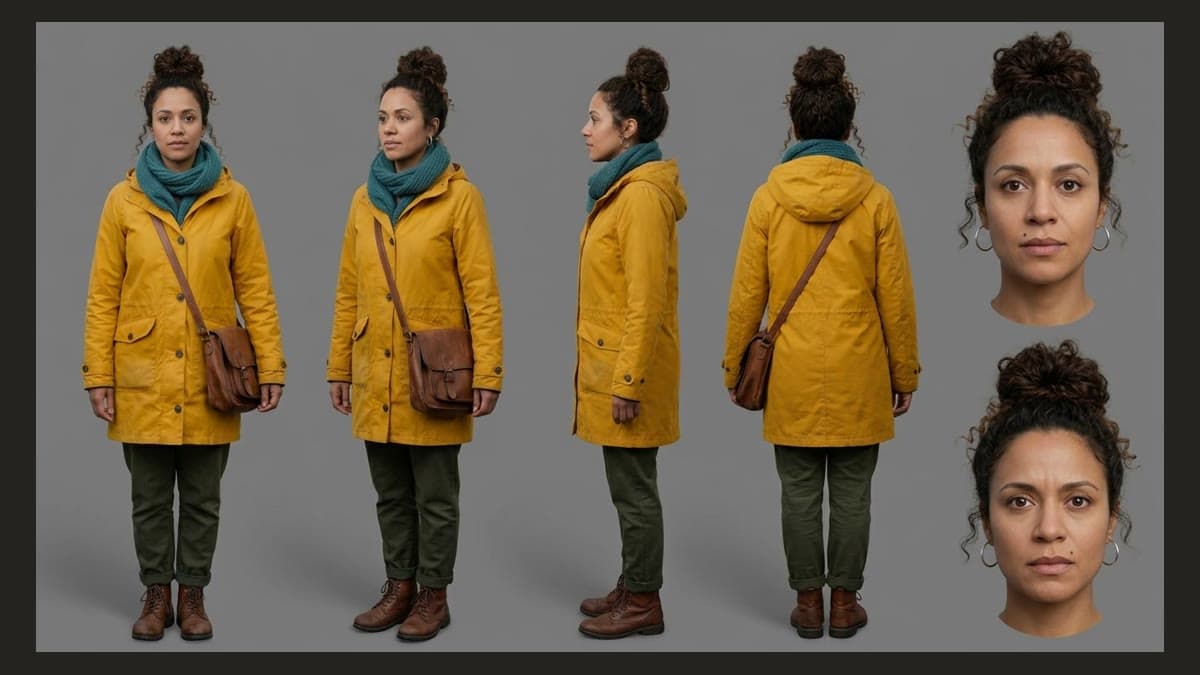
Series Lock is built for recurring AI video series. You write a series bible; Sentarys generates a reference portrait and a turnaround sheet for each character and a plate for each location with Gemini 3.1 Flash Image. Every shot starts as a locked first frame that must pass a face identity check (face embedding similarity against the character's anchor) before motion is paid for. Veo 3.1 Lite animates the frame at 720p with ambient sound, dialogue uses each character's fixed voice with captions, and only a failed shot is redone, with credits back when the video model blocks or fails it.
In our Saltmere case study, front close-ups across three episodes scored 0.64 to 0.74 against the anchor, while a text-only lookalike scored 0.50 to 0.55. We also tested Veo 3.1 Fast with reference images inside the same pipeline: identity came out worse and it cost about twice as much, so Series Lock animates from the locked frame instead.
Limits, stated plainly: output is 720p in 6 s shots; motion models still drift on faces that turn or are lit from the side; faces under about 80 pixels cannot be measured. If you need 4K, long talking-head videos or a trained twin of a real person, the tools above are better picks.
Pricing: 800 credits per generated second (minimum 4,800 per shot) and 6,000 credits per bible. Pro is US$10 a month with 30,000 credits; an 18 s episode is 14,400 credits.
How can you test character consistency yourself?
- Write one short bible: a character with a distinctive detail, two locations and a voice.
- Generate three shots in each tool: a front close-up, a three-quarter medium shot and a turn of the head.
- Compare each frame with your anchor portrait using a face embedding model, or side by side at full size.
- Count the shots you would publish as they are, and how long the fixes took.
Our step-by-step guide explains the full method. To try it in Sentarys, create an account.
FAQ
Which AI video tool keeps characters most consistent?
It depends on the job. Kling and LTX Studio handle multi-character scenes and voices, Higgsfield trains a real person's face, Hedra leads on talking characters, and Series Lock measures every first frame for recurring series. Test with your own character before you commit.
Can one reference image keep a character consistent?
Runway says one image is enough for Gen-4 References. In our tests, a turnaround sheet with several angles held identity better on turned and side views, which is why Series Lock builds one for every character.
Which tools let a character keep the same voice?
On the pages we checked, Kling (voice binding on Video 3.0 Omni), LTX Studio (a voice per Character Element), Hedra (driven by your audio) and Sentarys Series Lock (one fixed voice per character) cover voice.
Are these comparisons based on benchmarks?
No. Competitor features come from their official pages, checked on 2026-10-07. The identity scores in this post are from our own Saltmere demo made with Series Lock.
Why does Series Lock use Veo 3.1 Lite instead of Veo 3.1 Fast with references?
In our tests, Veo 3.1 Fast with reference images held identity worse and cost about twice as much as animating a locked, measured first frame with Veo 3.1 Lite.
Sources
- Runway, Introducing Runway Gen-4
- Kling, Element Library user guide
- LTX Studio, How to create a consistent AI character
- Higgsfield, Soul ID
- OpenArt, Characters
- Pika, Help Center
- Hedra, Character-3
- Google, Veo 3.1 Ingredients to Video
All pages checked on 2026-10-07.
Ready to try Sentarys?
Paste a link or upload a video and get finished clips with captions. 6,000 free credits on signup, no credit card required.
Get Started FreeRelated Articles
How to Keep the Same Character Across an AI Video Series
A practical method for consistent AI characters: write a series bible, build a turnaround sheet, start every shot from a reference frame, measure the face, animate, and redo only the shot that drifts.
Saltmere: Keeping One AI Character Across Three Episodes (Case Study)
How we made a three-episode AI series with the same character in every shot, with measured face similarity, what still drifts, and the real cost: US$6.41 for the whole demo.
How to Auto Clip Your Twitch Stream While You Are Still Live
Chat spikes, voice spikes and the story around them: how automatic Twitch clipping finds real moments, skips donation readings and hands you captioned vertical clips before the stream ends.